
In pro wrestling, you only get a few moments of pure, unmanufactured emotion. Arn Anderson’s retirement promo on Nitro in August 1997 was one of them — a raw, real goodbye from a man who never played a character.
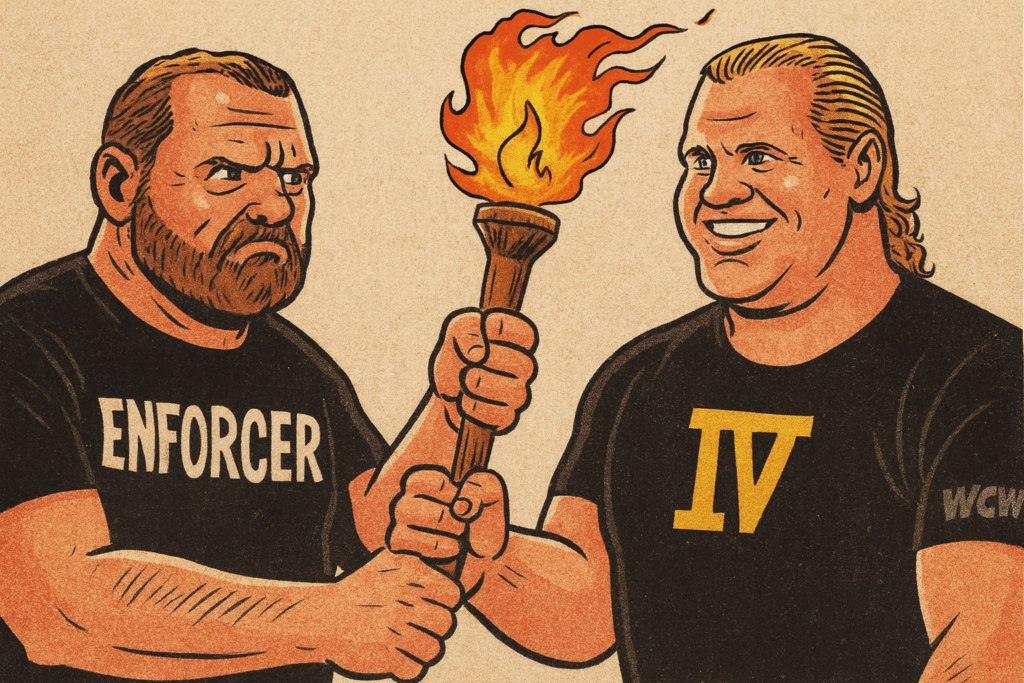
Arn wasn’t the flashy promo or the top belt guy — he was the spine of the business, the man every locker room trusted. He didn’t cry for sympathy; he spoke with dignity. “The Enforcer” wasn’t dying — he was passing something sacred. And in handing Curt Hennig “the enforcer’s spot,” Arn didn’t just anoint a replacement. He symbolically entrusted the future of wrestling tradition to a man who embodied work ethic and professionalism.
That should have meant something.
But just three weeks later, WCW twisted that emotion into parody — literally.
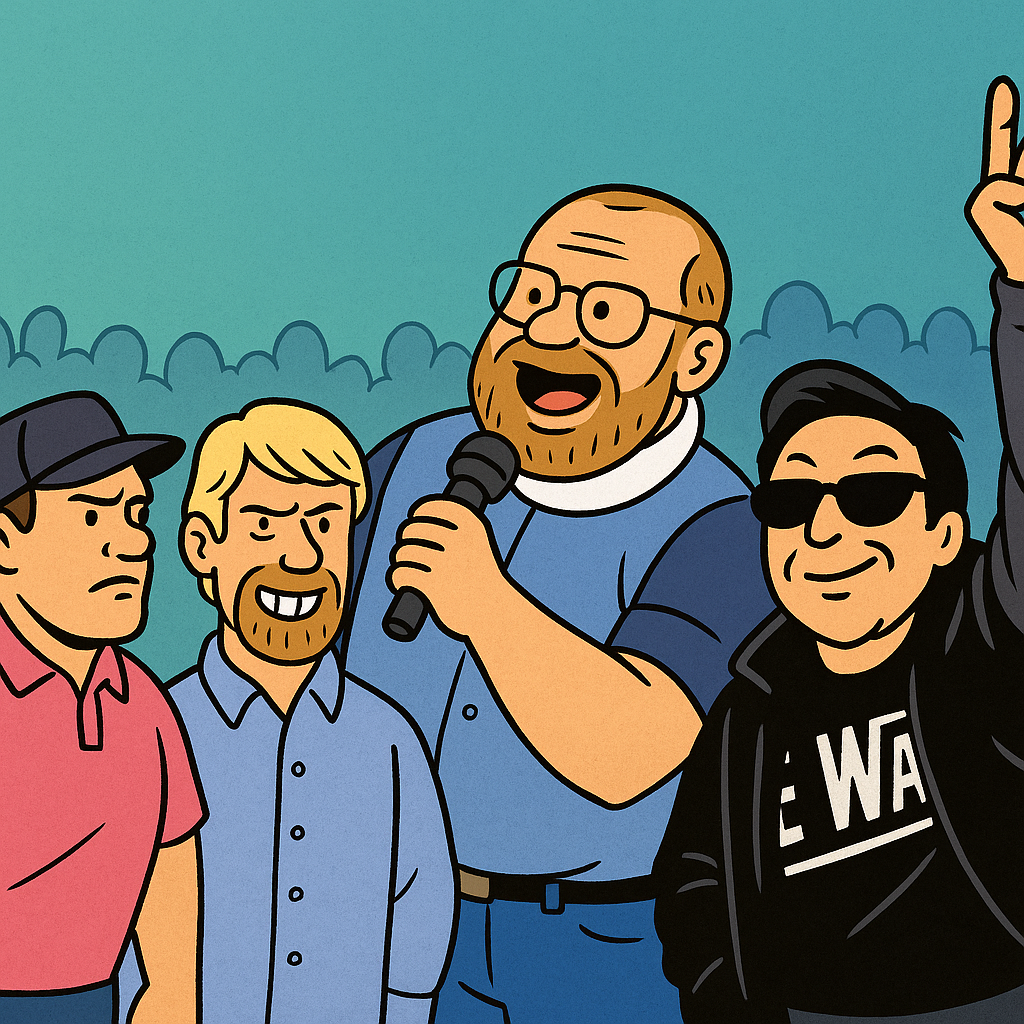
The infamous nWo parody of the Four Horsemen segment — with Kevin Nash mockingly pretending to be Arn Anderson — is still one of the most polarizing, yet disrespectful, promos in wrestling history.
Let’s be clear. A parody itself wasn’t the issue. The nWo was built on mockery. They thrived on satire and disrespect. It was part of the act. But there’s a line between rubbing your rival’s face in the dirt and spitting on something sacred.
Nash came out in a fake bald cap, beer belly stuffed under his shirt, slurring a cartoonish impression of Arn’s retirement speech. The line “I’ve got a spot for you” was dragged through the mud. The nWo laughed. The fans in North Carolina — Horsemen Country — didn’t.
That’s when the air changed. The crowd didn’t boo the heels for being dastardly. They booed the company for breaking their trust.
Wrestling psychology 101: heels insult heroes, heroes fight back, fans get their payoff. But WCW never gave the Horsemen their comeback.
The parody should have been the setup for revenge at Fall Brawl. Instead, it was the end of the story.
When the Horsemen walked into WarGames — their signature match, their home turf — the fans were ready for blood, ready for the Horsemen to shut the nWo’s mouths once and for all.
Instead, they got “Death to the Horsemen.”
Kevin Nash, Buff Bagwell, Syxx, and Konnan (yes, Konnan — not Hogan, not Hall) stood tall while Flair’s crew lay battered. The nWo didn’t just win — they humiliated the Horsemen in their own match, in their own backyard, on the night that was supposed to avenge Arn Anderson.
Worse, the match wasn’t even about Nash and company; it was about Curt Hennig’s turn. The emotional centerpiece of the entire story is ruined for another tired NWO swerve.
It’s hard to overstate how much this moment damaged WCW’s relationship with its core fanbase — the Southern loyalists who made the company matter in the first place.
When Kevin Nash uttered “Death to the Horsemen” after the match, it wasn’t just a promo line — it felt prophetic. That was the moment WCW turned its back on its roots.
Fans in Greensboro, Charlotte, and the Carolinas grew up on Horsemen dominance. WarGames wasn’t a gimmick; it was an institution. To mock that — and then have the mockers win — was like torching the family Bible on live television.
The nWo didn’t need the win. NWO leader Hollywood Hogan wasn’t even there. Hall wasn’t there. The biggest names didn’t even show up, yet the group still buried the most respected faction in wrestling history because “it’ll get heat.”
What it really got was apathy. In the middle of all this was Curt Hennig — a man who could’ve been the emotional glue that held it all together. Arn gave him his “spot,” and the fans accepted him as the next man up. The Horsemen legacy could have been rejuvenated through Hennig’s leadership alongside Ric Flair.
Instead, he became a pawn in the nWo’s overbooked chessboard.
At Fall Brawl, Hennig faked a shoulder injury, joined the Horsemen mid-match, and then slammed the cage door on Flair’s head in the kind of double-cross that might’ve been brilliant — if it hadn’t been the same playbook WCW had run several other times before.
The moment wasn’t shocking. It was exhausting. And the very next night, WCW sealed the mockery by having Hennig wear Flair’s robe and kneel before Hogan. It wasn’t heat; it was humiliation. Hogan smirked and called it “perfect.”
But nothing about that booking was. What WCW failed to realize is that you can’t mock emotion and expect fans to care later. Once you make the audience feel stupid for believing, you can’t get that magic back.
The Arn Anderson retirement could’ve been a once-in-a-generation passing of the torch. Instead, WCW turned it into a punchline and then stomped on the punchline at Fall Brawl.
And it wasn’t just about Arn or Flair — it was about trust.
WCW had a chance to balance the chaos of the nWo with the honor of the Horsemen, tradition versus rebellion. Instead, they fed tradition into the wood chipper.
After Fall Brawl ‘97, the Horsemen were never the same. The group limped through a few more incarnations, but the magic was gone. The Carolinas fans stopped believing WCW would ever give them their moment of vindication.
And ironically, Curt Hennig — the man who could’ve been the savior — faded into the background as just another nWo mid-card act. His “Perfect” legacy never got its second act.
WCW had the chance to show that tradition and emotion still mattered. Instead, they told the audience that we’re marks for caring.
Years later, when people talk about Fall Brawl ‘97, they don’t remember the spectacle. They remember the betrayal — not Hennig turning on the Horsemen, but WCW turning on themselves.
The nWo got their pop. Nash got his laugh. Hogan got his smirk.
But the company lost its heart. Because when Arn Anderson poured his soul into that retirement speech, it wasn’t about storyline — it was about brotherhood, legacy, and love for the business.
And WCW’s response to that real moment?
A parody.
Fall Brawl could’ve been the redemption.
It could’ve been the night the Horsemen stood tall, avenged the mockery, and reminded the wrestling world that respect still mattered. The rivalry between the Horsemen and nWo could have been building to the following year.
Instead, it became the night that WCW buried its soul under a pile of cheap heat.
Arn deserved better. The fans deserved better.
And Curt Hennig — handpicked, respected, and ready — never got to fulfill the role that could’ve redefined the Horsemen for a new era. WCW ruined the moment, and the legacy paid the price.