
By Andrew Khellah, Screentimed.com.
The tragedy of Phil Hartman remains a significant moment in Hollywood history, impacting fans and colleagues alike.
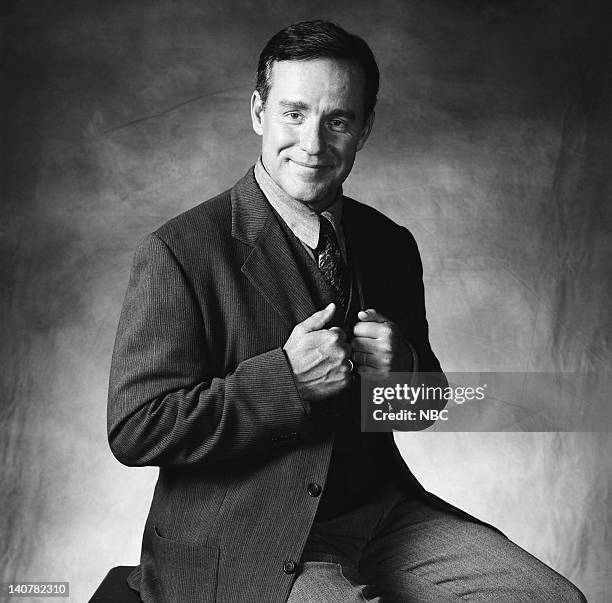
Few entertainers ever achieved the kind of universal love Phil Hartman earned. Whether he lampooned Bill Clinton’s easy charm on Saturday Night Live, voiced Troy McClure and Lionel Hutz on The Simpsons, or anchored the underrated sitcom NewsRadio, Hartman served as the comedic glue in every ensemble he touched.
But behind the perfect timing and polished smile was a man whose quiet personal pain contrasted sharply with his public poise — a contradiction that made his death in 1998 one of the most shocking in Hollywood history.
The Rise — From Graphic Designer to Comedy Institution
Before Phil Hartman became a household name, he was an artist in the literal sense. Born in 1948 in Ontario, Canada, and raised in California, Hartman studied graphic arts at California State University, designing more than 40 album covers — including America’s Greatest Hits and Poco’s Legend.
It wasn’t until his early 30s that he took a detour into comedy, joining the Los Angeles improv troupe The Groundlings. There, his sharp instincts and knack for morphing into any character made him a breakout talent. He helped shape Pee-wee Herman alongside Paul Reubens, co-writing Pee-wee’s Big Adventure and appearing on Pee-wee’s Playhouse — cementing himself as a creative force before most people even knew his name.
Saturday Night Live — The Every-Man of Impressions
Hartman joined SNL in 1986, a period when the show desperately needed a reboot. His calm confidence, polished delivery, and ability to ground chaos earned him the nickname “The Glue.” Unlike other comics chasing the spotlight, Hartman strengthened every sketch he was in. His Bill Clinton impression — casually devouring a hamburger while charming voters at a McDonald’s — became an instant classic.
He also played news anchors, Frankenstein’s Monster, and countless straight men to Chris Farley, Dana Carvey, and Mike Myers. Hartman’s approach wasn’t to steal scenes, but to stabilize them. He made absurdity believable — an underrated but invaluable skill in sketch comedy.
Beyond SNL — Animation, Sitcoms, and Stardom
After leaving SNL in 1994, Hartman found new fame in voice acting. On The Simpsons, he became synonymous with washed-up Hollywood charm as Troy McClure (“You may remember me from such films as…”) and the incompetent lawyer Lionel Hutz. His timing, delivery, and ability to parody celebrity culture made those characters immortal.
Then came NewsRadio, NBC’s workplace sitcom set in a Manhattan radio station. As egocentric anchor Bill McNeal, Hartman was both bombastic and endearing — a perfect showcase of his comedic duality. Off-screen, his colleagues described him as gentle, private, and meticulous, with none of the chaos often associated with fame.
The Fall — A Tragedy Behind Closed Doors
While Hartman’s career flourished, his personal life was fracturing. His third marriage to model and aspiring actress Brynn Omdahl (later Brynn Hartman) was turbulent. Friends said she struggled with jealousy over his fame and fought dependency on drugs and alcohol. Behind the calm exterior, Hartman often withdrew emotionally, preferring to avoid confrontation.
In the early hours of May 28, 1998, tragedy struck. After an argument, Brynn shot Phil Hartman as he slept in their Encino home, then later turned the gun on herself. Their two young children were asleep in the house. The entertainment world was left stunned as a comedic icon had passed away at 49.
The Aftermath — Shock, Grief, and Legacy
Hollywood reeled. The Simpsons immediately retired Troy McClure and Lionel Hutz, refusing to recast them out of respect. NewsRadio dedicated its next season to Hartman with an emotional tribute episode titled “Bill Moves On.” Friends like Jon Lovitz, who was devastated, publicly blamed Brynn’s relapse into addiction from the tragedy.
Yet, amid the heartbreak, Hartman’s work endured. His characters live on in reruns, voice clips, and sketches that still feel fresh today. He wasn’t just funny — he was reliable, the comedic north star for an entire generation of performers.
Everything In Between — The Man Behind the Microphone
What made Phil Hartman special wasn’t just his talent — it was his consistency. He wasn’t scandalous, he wasn’t flashy, and he never demanded more attention than a scene required. In an era defined by ego, he was professionalism personified. His colleagues often called him “the most normal guy in show business.”
Hartman’s story reminds us that fame doesn’t always shield pain, and sometimes the brightest laughter hides the most profound sadness. Still, his body of work — from SNL to The Simpsons to NewsRadio — remains a masterclass in character comedy.
Epilogue — The Legacy of a Comedy Craftsman
Phil Hartman’s legacy is one of laughter with layers — joy crafted with discipline, humility, and craftsmanship. His rise was slow and earned; his fall was sudden and senseless. But everything in between — the sketches, the voices, the perfectly timed smirk — is what keeps his memory alive.
To this day, when you hear, “Hi, I’m Troy McClure — you may remember me from such films as…” you can’t help but smile — and remember the man who gave the line its soul.
Phil Hartman’s life wasn’t just a career — it was a blueprint for every artist who believes in doing things right.
No scandals, no arrogance, no shortcuts.
Just discipline, warmth, and that subtle smirk that said, “I’m in on the joke — but I’m also making it better.”